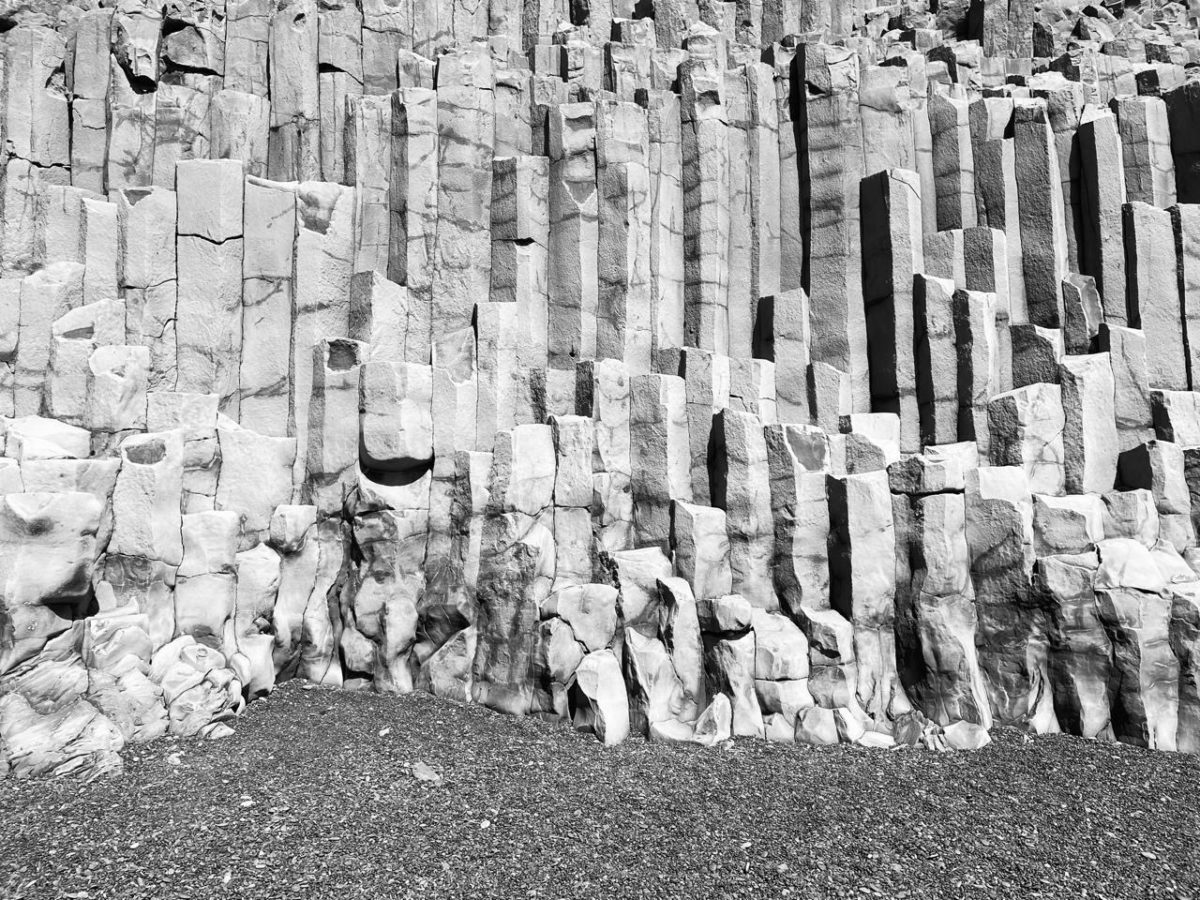
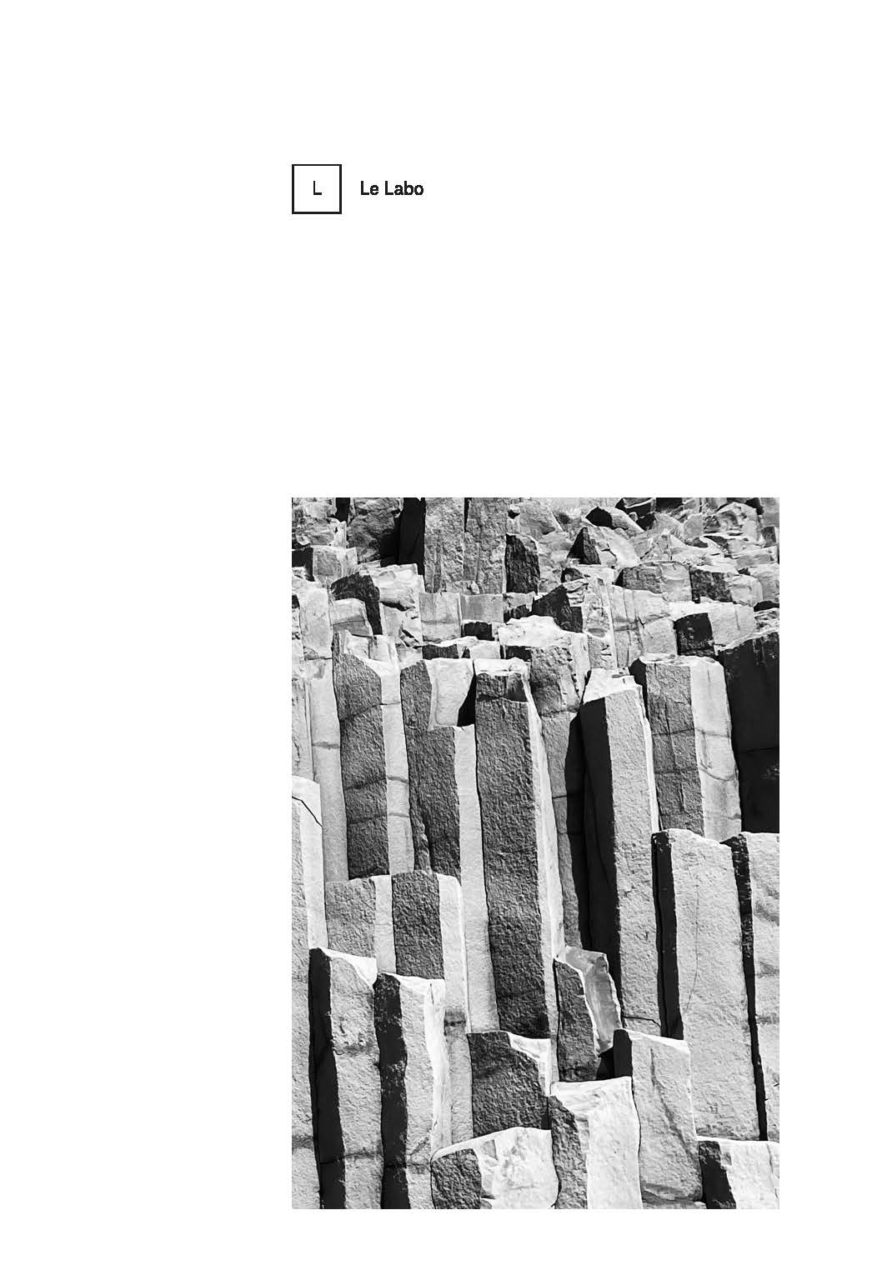
Beauty came to us in stone
10 01 25 — 19 01 25
Peter Stoffel
Vernissage jeudi 9 janvier 2025, 18h
Lecture et dédicace du livre de Peter Stoffel ISLAND (Beauty came to us in stone), édition fink, Zürich, 2024
20h – intervention sonore « sound stone intermezzi » par Thomas Schunke.


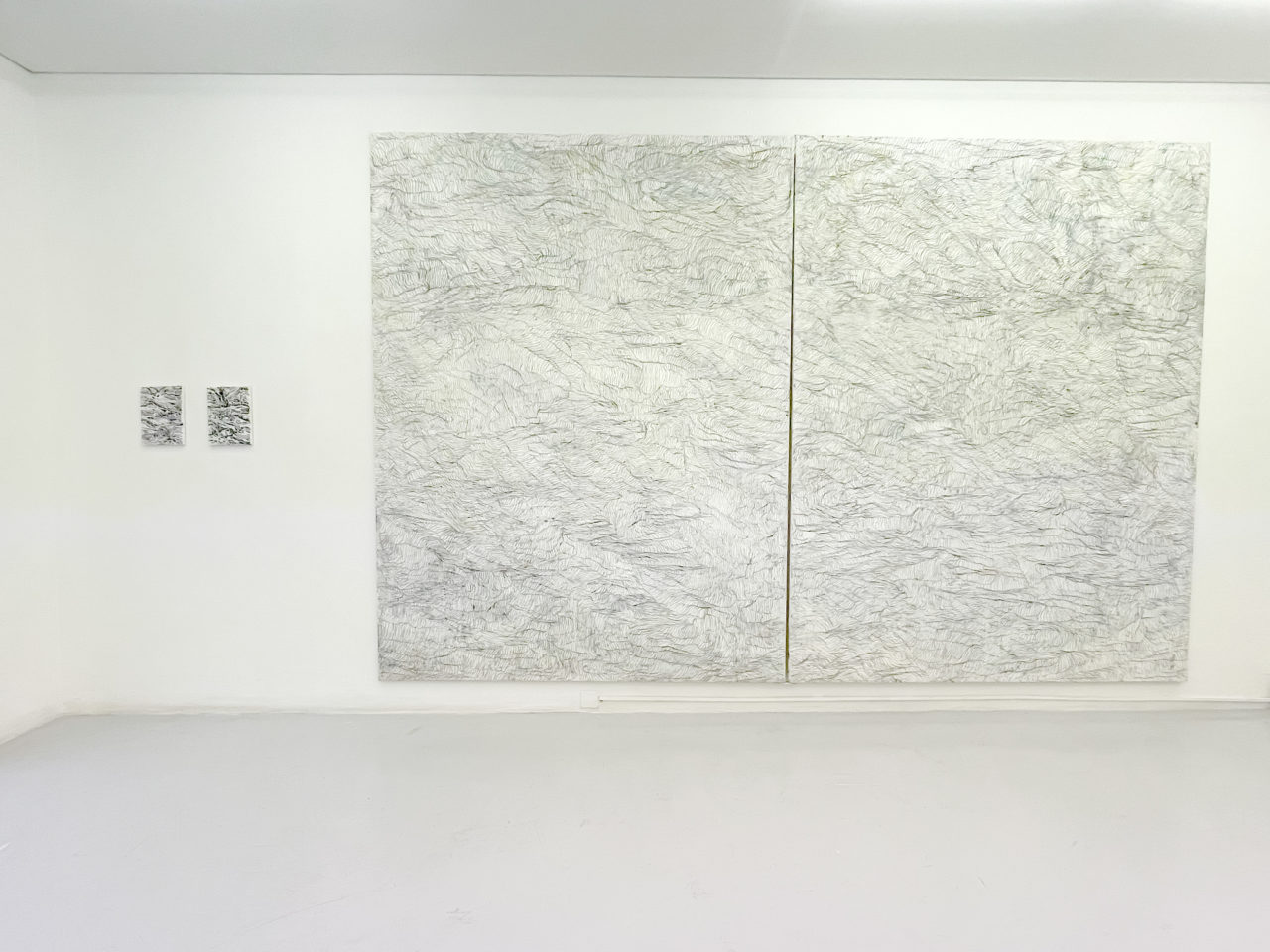

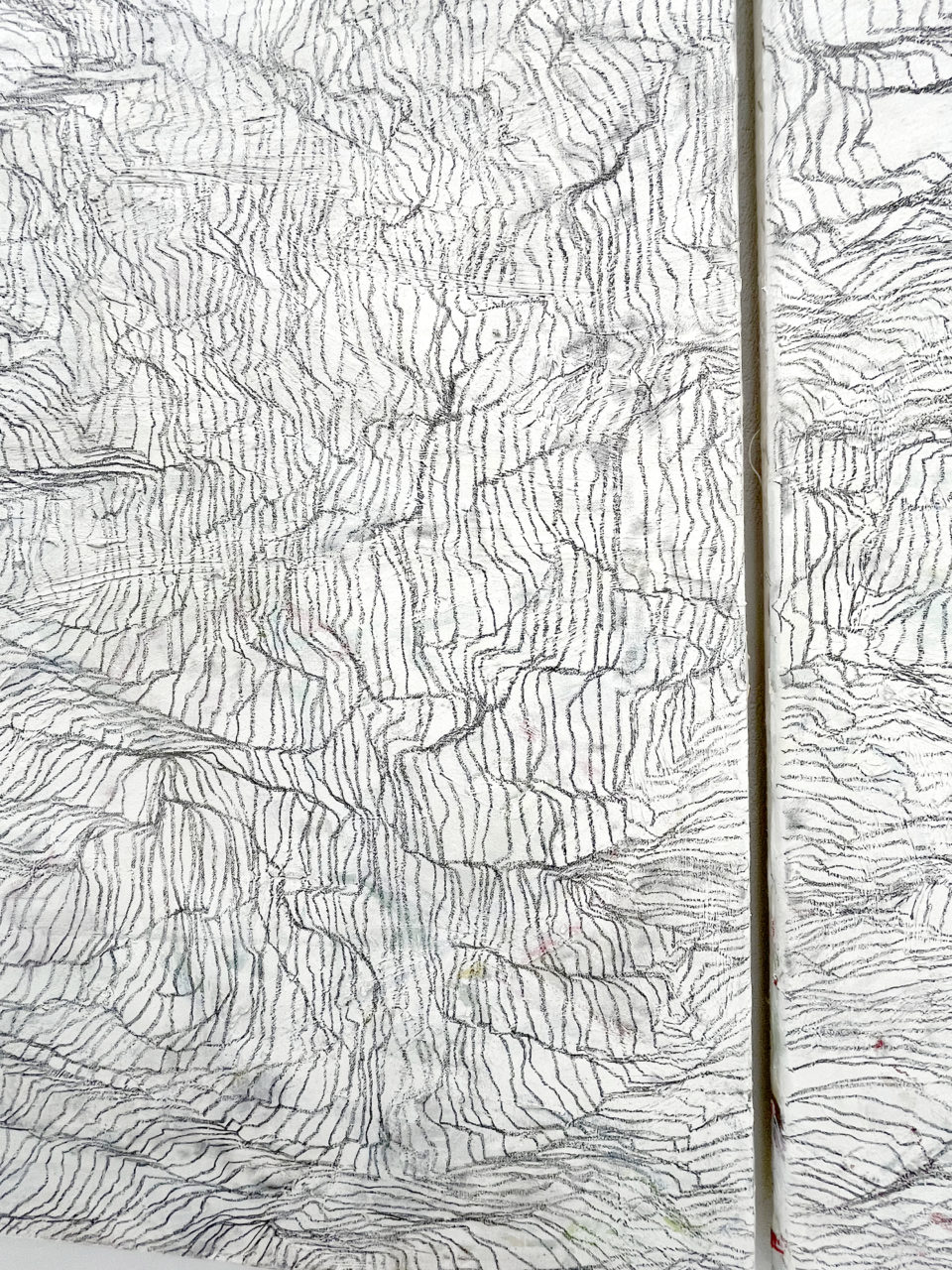
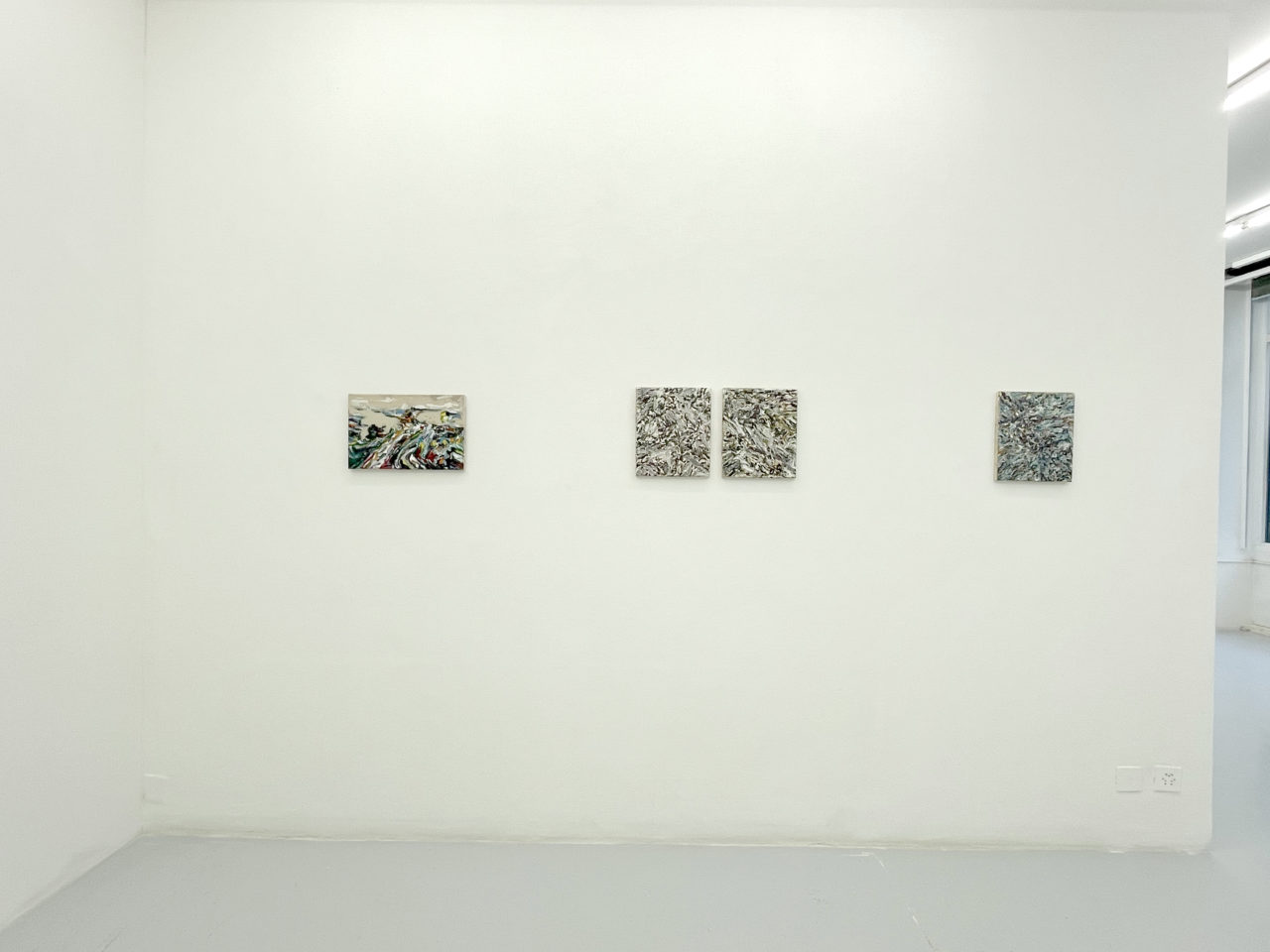
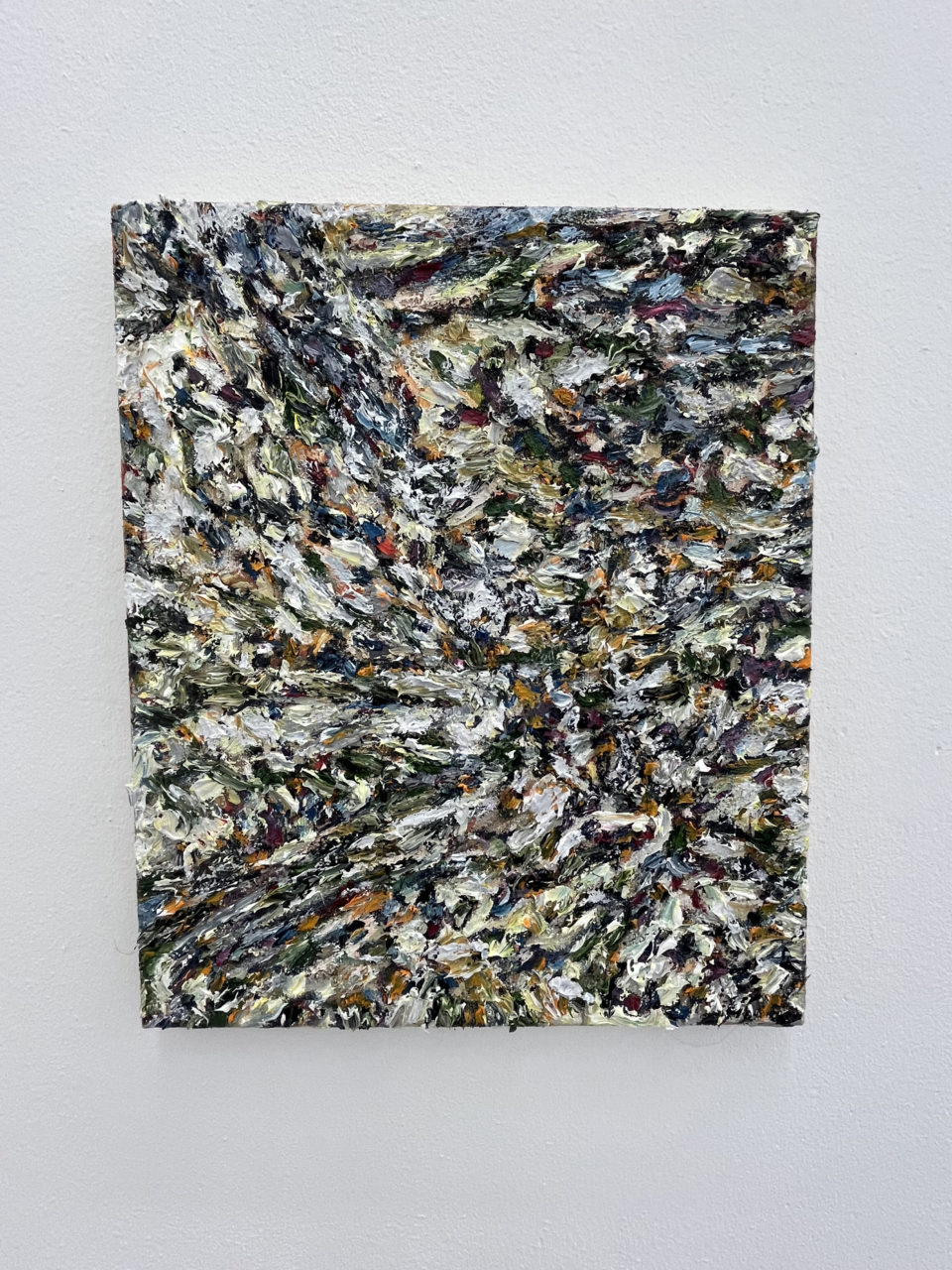
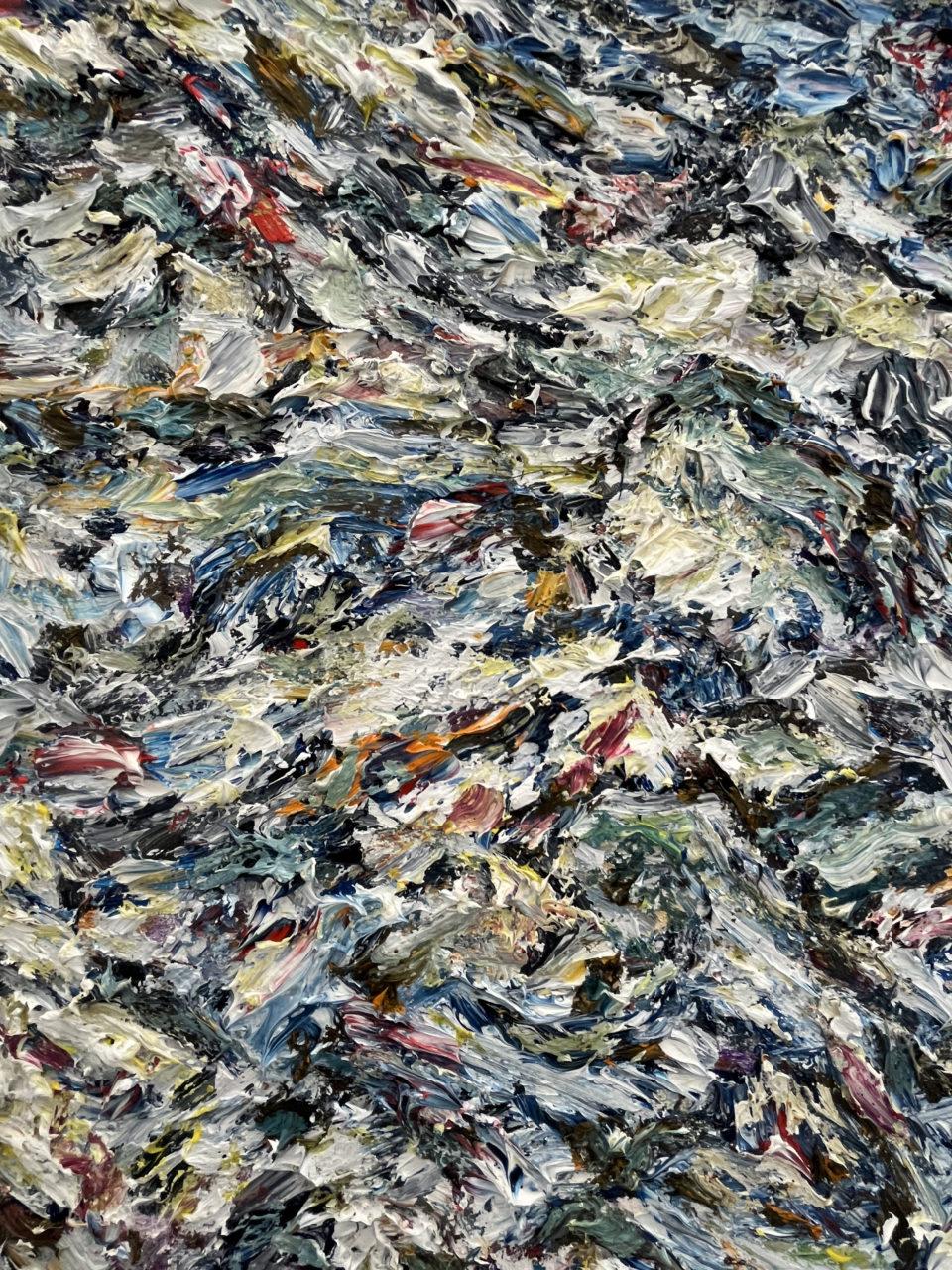
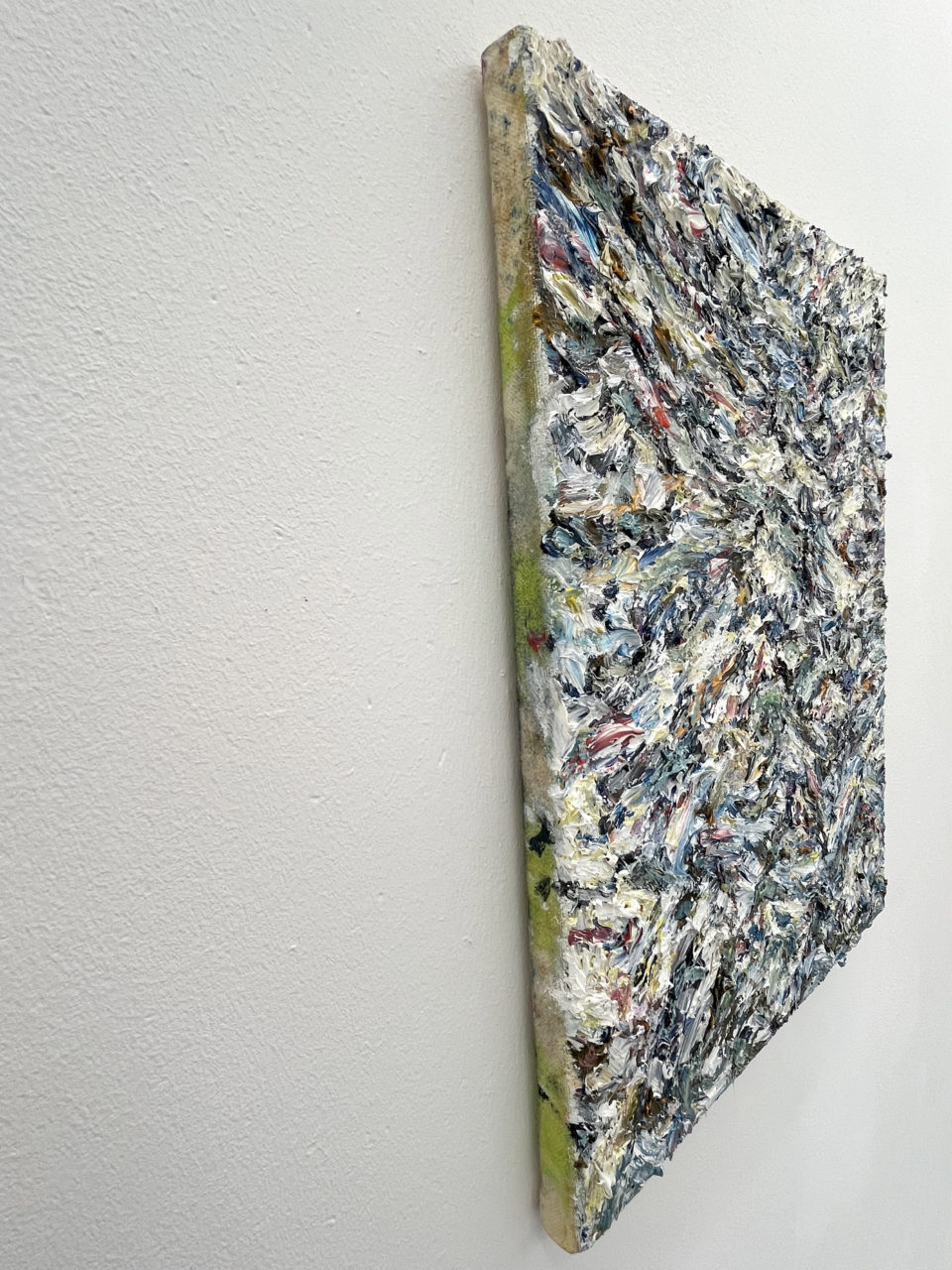
L’exposition est visible jusqu’au 19 janvier.
Le Labo est ouvert mercredi et vendredi de 16h à 19h et samedi de 14h à 17h et sur rendez-vous: contact@espacelabo.net
Beauty came to Us in Stone
09 01 25 — 19 01 25
Peter Stoffel
Beauty Came to Us in Stone
«So we meet again in Arolla,» Stoffel grins, prodding the Schublig sausages that arc
and twist over glowing embers at 2,000 meters above sea level. Years after writing
about our first meeting here for his exhibition catalogue at Kunstmuseum Solothurn,
we stand again at Europe’s highest campground. This time Stoffel has just returned
from Iceland, and the northern wilderness has left its mark on his artistic vision. The
sausages, still made by his own hands, remind me of my previous vegan protestations,
now worn smooth by time like river stones. He describes how the northern lights
had danced above active volcanoes – nature’s own version of his paintings, where
fluid energies course through solid forms. «Like that,» he says, gesturing at the
sausages curling in the heat, «everything is always in motion, even stone.»
I’m watching him from a precarious camp stool, feeling distinctly out of
place – still a city dweller who prefers his nature framed by hotel windows.
Around us, the highest campground in Europe stretches like a shelf cut
into eternity. Beyond, the Alps rear up with a static majesty that seems
tame compared to the liquid fire Stoffel witnessed in Iceland.
As darkness seeps up from the valleys, Stoffel begins to talk. His voice mingles
with the hiss of fat dripping onto coals. «In Reykjavik,» he says, turning
the meat with careful attention, «I watched the aurora paint the sky while
below, magma pushed against the earth’s crust. Light above, fire below – and
between them, the landscape constantly transforming.» Somewhere in the
darkness floats the familiar chime of unseen cattle bells, interwoven with the
wind’s sighing through the high passes. The Alps may appear immutable and
fixed, but Stoffel sees them through eyes recently calibrated to Iceland’s raw
geology, where creation and destruction perform their eternal dance.
«Look there,» he says suddenly, pointing with his fork toward where the
Pigne d’Arolla catches the day’s last light. The mountain appears to ripple, its
solidity momentarily questionable. «That’s what I’m after. Not the mountain
as object, but as event. A slow explosion caught in mid-burst.»
The meat is done. We eat in the gathering dark, watched by peaks that have become
massive absences against the star-bright sky. Last time, Stoffel spoke of painting
as an array of byzantine connections. Now, tempered by northern ice and fire, his
words carry new weight. «When you’ve seen the ground crack open and witnessed
light paint itself across the entire sky, you realize everything is fluid. Even these Alps
are just temporary formations, frozen moments in an endless flow.» «Like love,» he
says, grinning. «Either close enough to swallow or so vast you can’t see its edges.»
Night proper arrives with alpine suddenness. The fire dies to embers that
mirror the stars, and Stoffel’s voice takes on a different timbre. He speaks
of painting as cartography of the impossible – mapping territories that
exist between states of being. «Like the moment when magma becomes
stone, or when the aurora’s ethereal light seems to solidify into momentary
architecture.» His hands move in the darkness, sketching invisible forms.«I still want to paint an atlas,» he says, echoing his words from years ago,
«layer all images into one thick book and move through it like a worm.
Vertical, horizontal, diagonal.» He pauses. «To digest it, you understand?
To process it through the body. But now I understand better what that
means. Not just layers of images, but layers of time itself – glacial, tectonic,
cosmic. A book where every page is alive with transformation.»
The cold is becoming insistent. High above, unseen glaciers shift and groan – a
sound like the earth remembering. Stoffel feeds the fire and continues. He describes
paintings that operate like geological processes – compression, erosion, folding.
Canvases where space itself appears to bend and time becomes visible as texture.
Up here, his words acquire a peculiar resonance. The darkness around us
vibrates with possibility – not empty space but raw potential, like the instant
before water freezes into ice, when molecules pause to contemplate their future
architecture. The night air seems charged with this same suspended energy, as
if we’re floating in that ancient space where elements first learned to dance.
Morning arrives like a slow tide of light. The peaks materialize from darkness,
solid again but somehow altered by our night’s conversation. They read now like
enormous paintings in progress, their surfaces alive with incident and possibility.
Stoffel is already up, naturally, busy with breakfast and still talking. He wants
to see mountains from below. He wants to paint air currents and deep time.
He wants to fold space back on itself until it reveals its hidden symmetries.
I pack my gear, watching him gesture at the awakening landscape. Here at altitude,
surrounded by stone and sky, his obsessions make a different kind of sense. His
paintings aren’t representations of mountains – they’re investigations into how the
world assembles and disassembles itself, moment by moment, particle by particle.
The peaks loom above us, patient as paint drying, permanent as a gesture caught
in mid-stroke. Stoffel is still talking as I leave, his words merging with the morning
wind, becoming part of the mountain’s endless conversation with itself.
Tirdad Zolghadr
Vous devez être connecté pour poster un commentaire.